
Advocacy & Resolutions
BADC-Sponsored Resolution on Law Firm Recruiting Timelines Adopted by the ABA House of Delegates
At its 2026 Annual Meeting in Chicago, the ABA House of Delegates adopted Resolution 403, urging the legal community to study accelerating law firm recruiting timelines and their effect on legal education, student well-being, and the entry-level hiring market.

At the American Bar Association's 2026 Annual Meeting in Chicago, the House of Delegates adopted Resolution 403, sponsored by the Bar Association of the District of Columbia (BADC) at the request of a coalition of eighteen law school student governments. The resolution urges law schools, private legal employers, bar associations, and other stakeholders to study how accelerating law firm recruiting timelines affect the quality of legal education, law students' well-being, and the long-term health of entry-level legal hiring, and to weigh students' educational, professional, and equitable interests in their own recruiting practices.
The resolution responds to a sharp shift in recruiting behavior. By BADC's own filing with the ABA, 85% of second-year summer offers went out before July of students' first year in 2025, up from 34% the cycle before, and some firms now recruit first-year students for second-year summer jobs within weeks of their arrival on campus. The eighteen-school coalition, including Columbia, Cornell, Duke, Georgetown, Harvard, Michigan, Northwestern, NYU, Penn, Stanford, Texas, UC Berkeley, UCLA, Chicago, Virginia, Vanderbilt, WashU, and Yale, first raised the issue in a January 2026 letter to the ABA, several backed by student polls showing supermajority support. BADC's Board of Directors voted to sponsor the resolution on July 15, 2026, at the recommendation of BADC's Young Lawyers Section.
The ABA's own account of the Annual Conference confirmed Resolution 403’s adoption, listing it among a handful of law-student-focused policies the House passed, alongside measures on bar exam technology standards, practice-readiness programs for newly licensed lawyers, and funding for Historically Black Colleges and Universities’ law schools. Read the ABA’s report on the meeting.
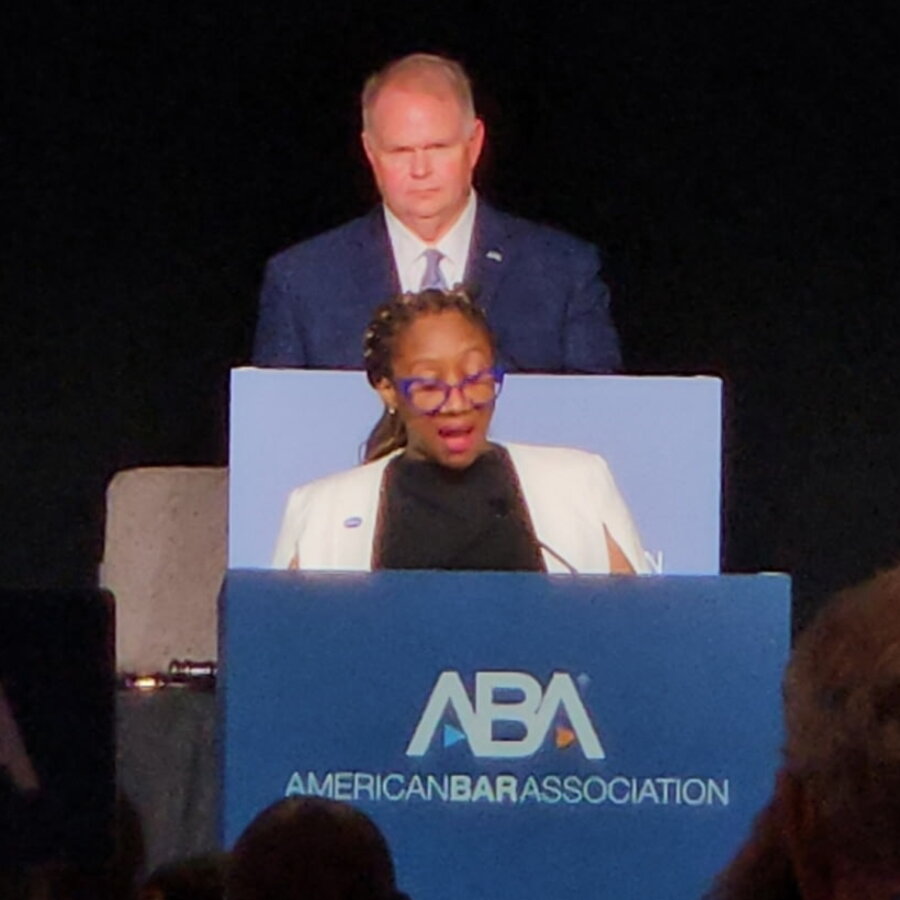
On the floor of the House, coalition speaker Shikya Harrison, President of UCLA's Student Bar Association, asked delegates to close their eyes and picture something disarmingly simple:
“Imagine someone hands you a blindfold… and tells you to walk into a grocery store, grab whatever you can reach, and check out, because that's the offer, and you have to decide now. You get outside, take off the blindfold, and look at what's in your bag. Maybe you got lucky. Maybe you got dog food.”— Shikya Harrison, President, UCLA Student Bar Association
Her testimony drew a standing ovation.
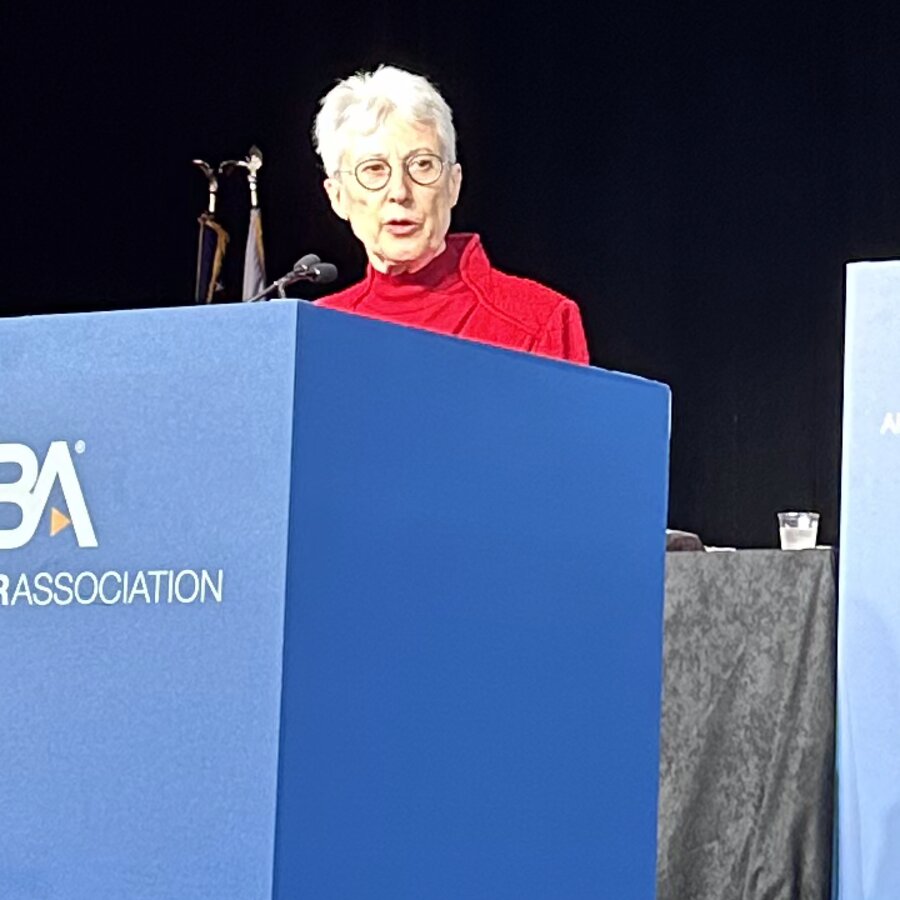

Philippe Lin spoke in support as the resolution's seconder, describing his own experience as a first-generation law student who didn't even realize he was supposed to be stressed about recruiting until the timeline had already passed him by, and closed with Justice Ruth Bader Ginsburg's words: “Real change, enduring change, happens one step at a time.” The line fits Resolution 403 itself: rather than mandating an immediate fix, it treats the call to study the hiring-timeline problem together as that first step.
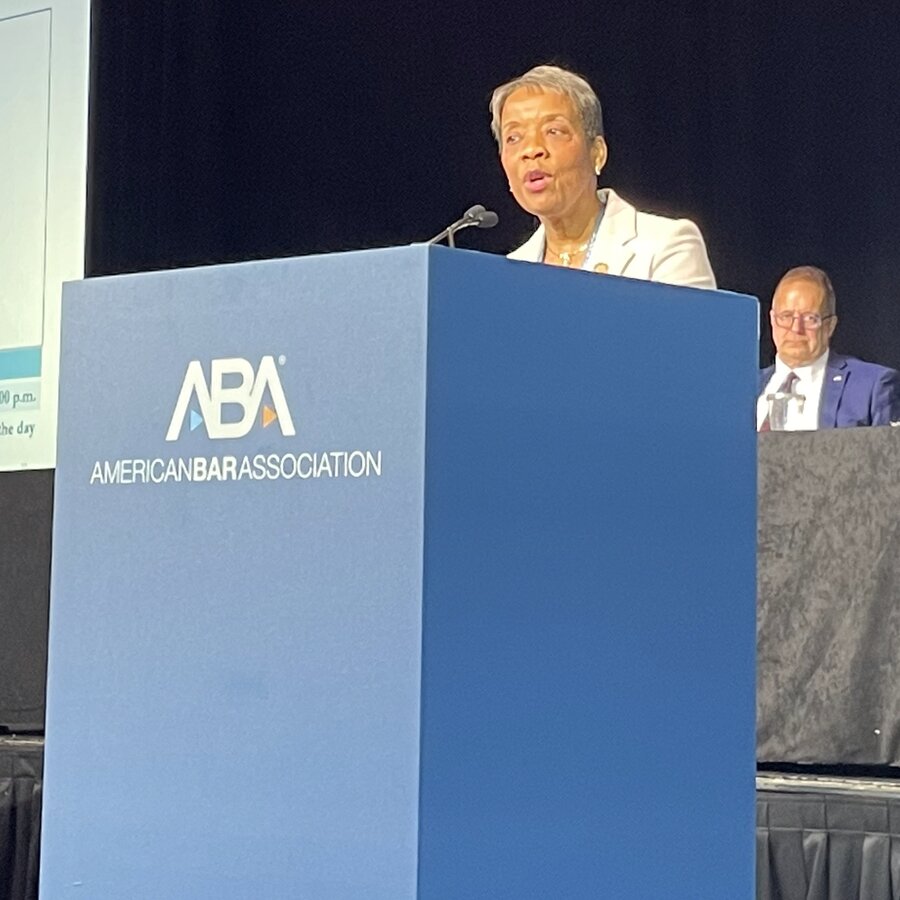
After Harrison and Lin spoke, outgoing ABA President Michelle A. Behnke of Wisconsin took the floor to voice her own support for Resolution 403. BADC’s delegation described the moment as unusual: sitting ABA presidents rarely weigh in from the floor on a specific resolution, reserving those interventions for matters they consider especially significant. It was one of Behnke’s last official acts before handing the presidency to Barbara J. Howard of Ohio at the close of the conference.
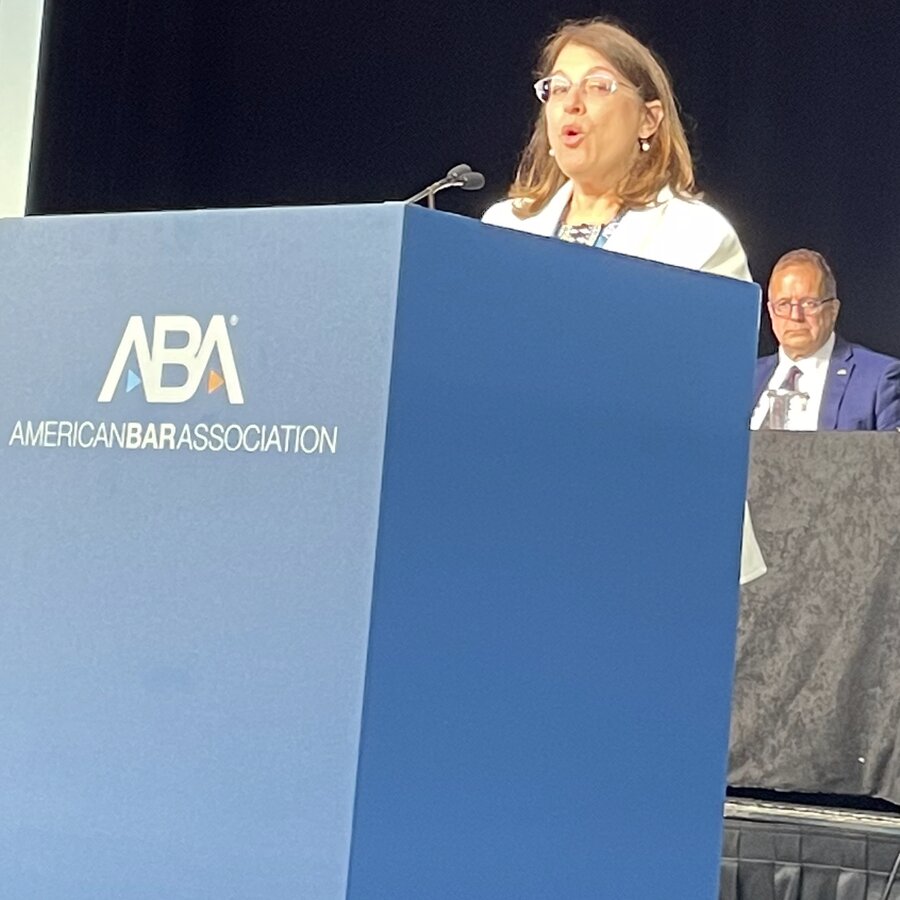
Professor Paula C. Martucci, of the ABA Section of Antitrust Law, spoke next, giving the House background on the coalition’s yearlong work to bring the recruiting-timeline issue forward.

BADC's delegation, delegate Lorelie Masters and alternate delegate Philippe Lin, reported it as one of the most warmly received resolutions of the session.
Resolution 403 doesn't mandate a specific timeline or reform. It asks the profession to study the problem together first, since, as the resolution's report to the House puts it, no single firm can slow down without losing candidates to a competitor that won't.
← Back to all news